Flash. I have not got much successful experience of flashes, which I find often end up too hard and artificial. Besides they do not work in long distance situations, like public evening football matches or Peking Opera.
Aperture. Increase the aperture (lower the F-value), and more light falls on the image sensor.
Shutter speed. Increase the shutter speed, and more light falls on the image sensor.
ISO. Increase the ISO value, and the image sensor becomes more light sensitive and can handle low light. At the same time noise increases in the picture. How high ISO values one can use with success depends much on the camera.
And then my favourite solution:
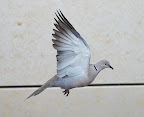
Change lens. It may not be intuitive to talk about "fast" or "slow" lenses. A lens is mostly fairly static glass, after all. However, some lenses allow for bigger aperture than others. That means that they work better in low light situations. Even in normal light, you can increase the shutter speed more, so it is easier to capture, for example, birds in flight.
My "fast" lens is a AF Nikkor 50mm f/1.8D. It is small enough to fit in my pocket. It weighs just 155g compared to the 560g of my AF-S DX VR Zoom-Nikkor 18-200mm lens. It cost not much more than 150 euro. And it is much faster than the 18-200mm lens, which has a maximum aperture of just f/3.5.
The 50mm f/1.8D is not a DX lens, which means that the equivalent picture angle for most digital cameras is 75mm.
The 50mm f/1.8D has no zoom, but that is actually often a blessing. As I know I cannot change the zoom, I concentrate more on getting the other values right when in a hurry.
Luckily, 75 mm is more or less my favourite angle. I often end up there around even with the 18-200 lens.
The 50mm f/1.8D has no auto focus, when used on Nikon's low end DSLRs (D40, D40x or D60). That is not always that bad. It is sometimes easier to manually adjust the focus than to select the right focus points. Besides, manual focus is what our grand-parents used, and it worked fine for them.
With all other current Nikon DSLRs (including my D300) the auto focus should work.
Some review of the 50mm f/1.8D, claimed that it provides "super sharpness". That is a slight exaggeration, but the lens is more than adequate in most situations. I tested it on a tripod against my 18-200 zoom and the low end AF-S DX Zoom-Nikkor 18-55mm that came bundled with my D40X. I applied each of the lenses to my D300 and shot the same section of my bookshelf at maximum and minimum aperture. The low end 18-55 actually did slightly better than the 50mm f/1.8D. However, the difference was very small. In a handheld test, the 50mm f/1.8D of course was much sharper than the other two, as it allows for much bigger aperture and therefore quicker shutter speed.

No comments:
Post a Comment